

September 24, 2026
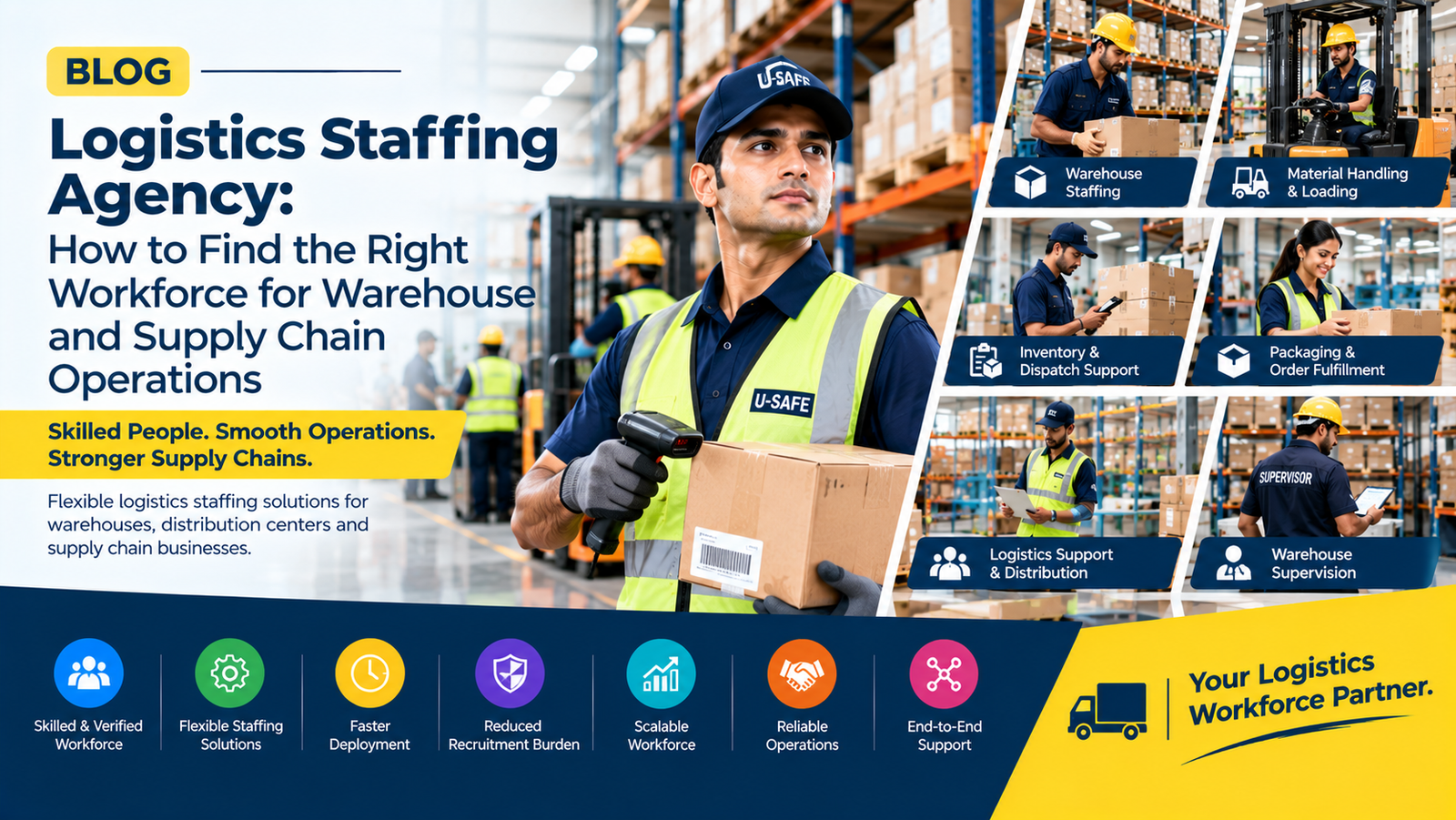
Logistics Staffing Agency: How to Find the Right Workforce for Warehouse and Supply Chain Operations
Efficient logistics operations depend on the right people, the right processes and reliable workforce management. Warehouses, distribution centers, manufacturing units and supply chain businesses often face challenges such as workforce shortages, absenteeism, seasonal demand and increasing operational workloads.
A professional logistics staffing agency can help businesses address these challenges by providing workforce solutions designed around their operational requirements.
From warehouse workers and material handlers to logistics support staff, professional staffing can help businesses maintain smoother day-to-day operations.
What Is a Logistics Staffing Agency?
A logistics staffing agency helps businesses recruit and deploy workers for logistics, warehouse and supply chain operations.
Depending on the business requirement, logistics staffing may support:
- Warehouse operations
- Material handling
- Loading and unloading
- Inventory support
- Dispatch operations
- Packaging
- Distribution
- Transportation support
- Supply chain operations
- Warehouse supervision
The workforce model can be customized according to facility size, shift requirements, workload and business demand.
Why Businesses Need Logistics Staffing Solutions
Logistics operations can experience significant fluctuations in workforce requirements.
For example, businesses may require additional workers during:
- Seasonal demand
- Promotional periods
- Inventory cycles
- New warehouse launches
- Business expansion
- Increased distribution volumes
- Temporary workforce shortages
Maintaining a large permanent workforce throughout the year may not always be practical.
Professional logistics staffing solutions allow businesses to adjust their workforce according to operational requirements.
Key Benefits of Working With a Logistics Staffing Agency
Faster Workforce Deployment
When businesses need additional manpower, a professional staffing provider can help coordinate workforce deployment according to the agreed requirements.
Reduced Recruitment Pressure
Businesses can reduce the internal workload associated with sourcing, screening and coordinating logistics workers.
Flexible Workforce
Staffing requirements can be adjusted according to changes in operational demand.
Better Workforce Coordination
A professional provider can help manage attendance, deployment and workforce supervision.
Support During Peak Seasons
Temporary increases in logistics activity can create sudden manpower requirements. Flexible staffing can help businesses respond to these periods.
What Types of Logistics Staff Do Businesses Need?
Different logistics operations require different workforce profiles.
Warehouse Staff
Warehouse workers may support:
- Inventory movement
- Stock handling
- Packaging
- Order preparation
- Loading and unloading
- Warehouse organization
Material Handling Staff
Material handlers can support the movement of goods and materials within warehouses, factories and distribution facilities.
Dispatch Staff
Dispatch teams help prepare goods for shipment and support the movement of orders through the distribution process.
Loading and Unloading Workforce
Businesses with high material movement may require dedicated manpower for loading and unloading activities.
Warehouse Support Staff
Additional personnel may be required for general warehouse operations, documentation support and workplace coordination.
Logistics Staffing for Warehouses
Warehouses require efficient workforce coordination because multiple activities take place simultaneously.
A warehouse may need employees for:
- Receiving
- Sorting
- Storage
- Picking
- Packing
- Inventory movement
- Dispatch
- Loading
- Unloading
A shortage in one area can affect the wider workflow.
Professional warehouse staffing solutions can help businesses plan manpower according to operational volume and shift requirements.
Logistics Staffing for Manufacturing Companies
Manufacturing businesses depend on a continuous flow of materials between suppliers, warehouses and production areas.
Logistics manpower can support:
- Raw-material movement
- Warehouse operations
- Internal material handling
- Dispatch
- Finished-goods movement
- Loading and unloading
- Inventory support
When logistics and production operations are properly coordinated, businesses can reduce avoidable workflow disruptions.
Logistics Staffing and Supply Chain Management
Logistics is an important component of broader operations and supply chain management.
Supply chains involve multiple stages, including sourcing, storage, transportation, production and distribution.
A reliable workforce can support the operational activities required at different stages.
Professional staffing solutions can contribute to:
- Workforce availability
- Material movement
- Warehouse productivity
- Distribution support
- Operational continuity
- Supply chain coordination
How Staffing Supports Operations Excellence
Operations excellence focuses on improving processes, productivity, resource utilization and consistency.
Workforce planning is an important part of achieving these objectives.
When the right number of employees are available at the right time, businesses can better coordinate operational activities.
Effective workforce management can support:
- Productivity
- Process efficiency
- Workforce utilization
- Operational planning
- Service quality
- Business continuity
Logistics Staffing During Peak Demand
Peak periods can put considerable pressure on logistics operations.
During high-demand periods, businesses may need additional workers for:
- Order processing
- Packing
- Inventory handling
- Loading
- Dispatch
- Warehouse operations
- Delivery preparation
A flexible staffing model allows businesses to increase workforce capacity when operational demand rises.
How to Choose the Right Logistics Staffing Agency
Businesses should evaluate several factors before selecting a logistics staffing agency.
Industry Experience
Look for a provider with experience in logistics, warehousing, manufacturing or supply chain environments.
Workforce Availability
Ask how quickly the provider can source and deploy additional personnel when required.
Recruitment Process
Understand how workers are sourced, screened and selected.
Workforce Supervision
Find out whether the provider offers supervisors or workforce management support.
Attendance Management
Reliable attendance is essential for shift-based logistics operations. Ask how attendance and absenteeism are monitored.
Scalability
Your workforce requirements may change. Choose a staffing partner that can scale manpower according to business demand.
Communication
Clear communication between the client and staffing provider is essential for managing changing workforce requirements.
Questions to Ask a Logistics Staffing Agency
Before signing an agreement, businesses should ask:
- What types of logistics workers do you provide?
- Do you provide warehouse staffing?
- Can manpower be increased during peak demand?
- How are workers recruited?
- What verification process is followed?
- How is attendance monitored?
- Do you provide workforce supervision?
- Can you support multiple locations?
- What happens when a worker is absent?
- How quickly can replacement staff be arranged?
- Can staffing be customized according to shifts?
These questions can help businesses understand whether a provider can support their operational requirements.
Logistics Staffing vs Direct Recruitment
Businesses can recruit logistics workers directly or partner with a staffing agency.
Direct recruitment requires internal teams to manage:
- Candidate sourcing
- Screening
- Documentation
- Hiring
- Attendance
- Replacement staffing
- Workforce administration
A professional logistics staffing agency can manage many of these workforce-related activities according to the agreed service structure.
The right approach depends on the organization’s workforce size, operational complexity and staffing requirements.
Why Logistics Staffing Is Important for Growing Businesses
As businesses expand, logistics operations often become more complex.
New warehouses, additional distribution locations, larger inventories and increased order volumes can all create additional manpower requirements.
A scalable staffing partner can help businesses adjust workforce levels as operations grow.
This can be particularly useful for organizations operating multiple warehouses, distribution centers or manufacturing facilities.
Integrated Logistics and Facility Management
Logistics staffing does not always operate independently.
Large facilities may also require:
- Security staffing
- Housekeeping
- Maintenance
- Manpower solutions
- Workplace support
- Operations management
An integrated facility management provider can coordinate multiple support functions through one management structure.
For example, a warehouse may require security staffing for access control, housekeeping for facility cleanliness, maintenance support for infrastructure and logistics staffing for daily warehouse operations.
This integrated model can simplify workforce coordination and vendor management.
Final Checklist for Choosing a Logistics Staffing Partner
Before selecting a logistics staffing agency, evaluate:
- Industry experience
- Workforce availability
- Recruitment standards
- Employee verification
- Attendance management
- Workforce supervision
- Replacement support
- Scalability
- Shift flexibility
- Reporting systems
- Communication
- Contract terms
A clear evaluation process can help businesses find a staffing solution that matches their operational needs.
Final Thoughts
Reliable manpower is one of the foundations of efficient logistics operations.
Whether you operate a warehouse, manufacturing facility, distribution center or supply chain business, professional logistics staffing services can help address workforce shortages, seasonal demand and changing operational requirements.
The right logistics staffing partner can support warehouse operations, material handling, inventory movement, dispatch and other essential activities while reducing the administrative pressure associated with workforce management.
U-SAFE provides integrated facility management and workforce solutions, including logistics staffing, manpower solutions, security staffing, housekeeping, maintenance and operations support for businesses with diverse operational requirements.